


Ethnic rhinoplasty refers to a popular type of nose surgery that is tailored to address the unique characteristics of individuals from various ethnic backgrounds. The goal of this procedure is to enhance or refine the appearance of the nose while still maintaining the patient’s ethnic identity.
For example, individuals of African, Asian, or Hispanic descent may have wider or flatter noses with broader nostrils and thicker skin, while those of European or Middle Eastern descent may have more prominent bridges or sharper nasal tips. Dr. Totonchi aims to take these differences into account to create a more harmonious and balanced face.
Keep reading to learn about some common ethnic rhinoplasty treatments Dr. Totonchi is well versed in providing his patients at Totonchi Plastic Surgery.
Real Dr. Totonchi Patient, Before & After Ethnic Rhinoplasty *
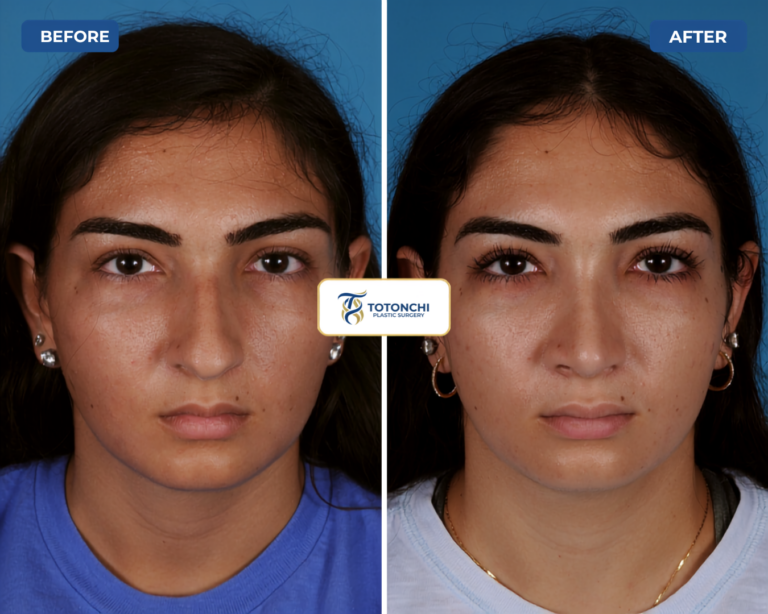
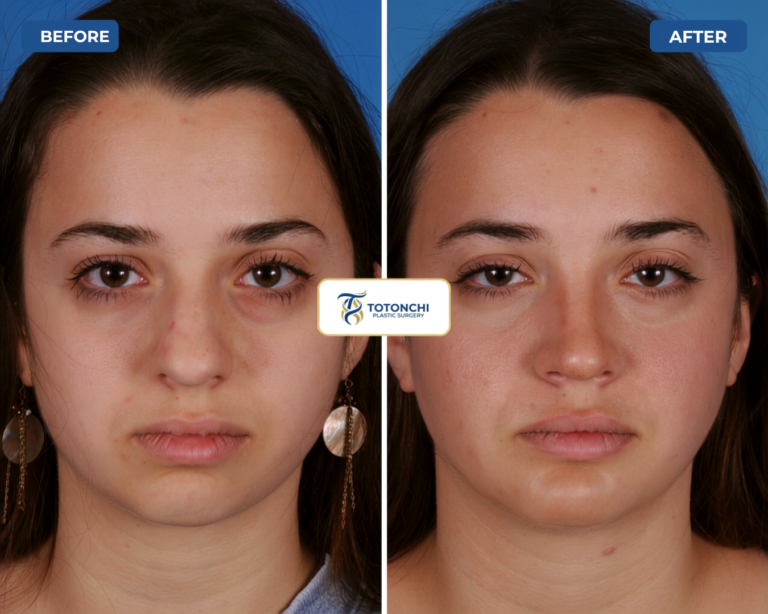
Rhinoplasty is becoming increasingly popular among the African American population. Common aesthetic concerns of the African American nose include:
A wide dorsum, ill-defined tip, decreased tip projection, alar flaring (nostrils), and diminished nasal height and length.
Dr Totonchi appreciates the ethnic concept of beauty and nasofacial harmony to create an aesthetic balance in treating African American rhinoplasty patients. The goal to be met for rhinoplasty on African American noses is to achieve harmony and balance, with a narrower, straight dorsum, increased height, better tip projection and definition, while reducing nasal flaring. Nasofacial harmony is the ultimate goal of any surgical plan.
Challenges when working with the African American nose are that the skin is thick, sebaceous, and inelastic, making it difficult to obtain a well-defined tip. Choosing a rhinoplasty plastic surgeon who is skilled in ethnic noses is imperative to be able to achieve your goal.


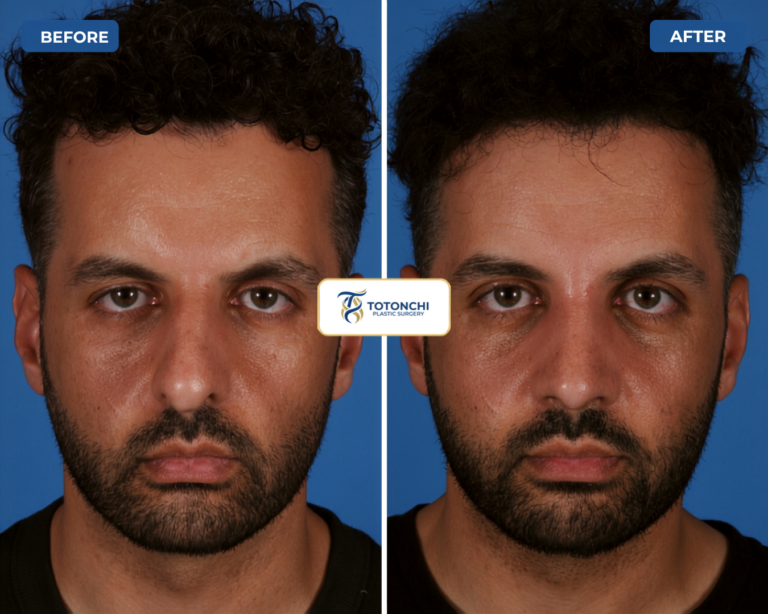
The Middle Eastern nose often demonstrates a high dorsum, ill-defined or dependent, droopy nasal tip, prominent dorsal hump and often an obvious nasal or septal deviation.
Dr Totonchi appreciates the ethnic concept of beauty and nasofacial harmony to create an aesthetic balance in treating Middle Eastern rhinoplasty patients. The goal to be met for rhinoplasty on the Middle Eastern nose is to achieve harmony and balance, this is achieved by a reduction in dorsal height, a reduction in dorsal hump, correction of septal deviations, narrowing and defining the nasal tip and defatting of the soft tissue of the tip, and correcting asymmetry of the nares.
Challenges, when working with the Middle Eastern nose, are that the skin is thick, sebaceous, and redundant, making it difficult to achieve fine definition. Choosing a plastic surgeon who is familiar and has experience in ethnic noses is crutial to be able to achieve your aesthetic goals.
Asian rhinoplasty patients frequently desire augmentation to the dorsum of the nose with added projection of the tip. Typically, Asian noses have relatively week structural support and thick overlying skin tissue.
The goal to be met for rhinoplasty on the Asian nose is to achieve harmony and balance, this is achieved by tip refinement and creating dorsal height. Implants or cartilage grafts are generally needed to create both dorsal height and tip projection. Cartilage grafts are taken from the septum, ear or costal cartilage(ribs). Dr. Totonchi’s preference in Asian rhinoplasty is rib graft to achieve dorsal height.
Challenges when working with the Asian nose, are generally associated with the complications that can arise with the harvest of the cartilage graft used for augmentation. Choosing a plastic surgeon who is skilled in ethnic noses is imperative to be able to achieve your aesthetic goal.
When it comes to function, rhinoplasty can help resolve airway and breathing issues and in turn provide tremendous relief to those who cannot breathe properly due to dysfunctional nasal anatomy. The most common plastic surgery procedure associated with correcting airway issues due to a deviated septum is a septoplasty. The septum is composed of bone and cartilage which separates the left and right nares. When the septum is deviated, difficulties in breathing can occur. Septoplasty involves surgically correcting the deviation in order to increase nasal airflow. Turbinate reduction can also be done at the same time, if indicated, to increase air movement through the nares.

Dr. Totonchi recommends that his rhinoplasty patients prioritize rest and relaxation for the first week of their recovery. He will prescribe pain medication so patients can relieve any post-surgical discomfort. Patients should wear their nasal splint to help support and protect the nose.
Most patients feel and look well enough to resume their jobs and normal activities after about two weeks, though they should avoid any activities that could potentially result in an injury to the nose.
Full results may not be visible for several months as the swelling gradually subsides. However, patience is rewarded with permanent results. Patients can enjoy their new nose shape for the rest of their lives.
Because every rhinoplasty that Dr. Totonchi performs is unique and intricate, the cost is determined by the specific techniques utilized to achieve the patient’s preferred changes. On average, ethnic rhinoplasty does not cost more or less than “traditional” rhinoplasty.
Most nose reshaping surgeries that Dr. Totonchi performs are considered cosmetic, so they are not covered by insurance. However, a functional rhinoplasty that is meant to improve breathing may be covered, at least in part, by insurance. Financing options are also available.
In the United States, nearly three out of every four rhinoplasty patients are white. Many plastic surgeons learned this surgery on white patients and have predominately performed this surgery on white patients throughout their careers. Combine that with the “white beauty ideal” that is prevalent in the United States, and this results in some doctors, even if unconsciously, sculpting the noses they work on to match a white face.
Unfortunately, these anglicized features do not always correspond with non-white faces. This can leave patients of color feeling dissatisfied with their results. After all, most patients want to enhance their appearance, not change it dramatically by erasing their cultural identity.
This is why so many patients of color choose Dr. Totonchi for ethnic rhinoplasty. He has studied the nuances between noses across a wide range of cultures and implements these differences into the surgeries he performs.

Many patients have a combination of aesthetic and functional nasal concerns that they seek to correct when undergoing rhinoplasty surgery. During the consultation, Dr Totonchi will talk with you and create a customized surgical plan, based on your individual aesthetic and functional concerns, and desired outcome.
It is important to note that ethnic rhinoplasty requires a high level of skill and experience on the part of the surgeon, as well as an understanding of the cultural nuances of the patient’s ethnic background. Patients considering ethnic rhinoplasty should choose a surgeon like Dr. Totonchi who has extensive experience in performing this type of surgery and who is sensitive to the cultural and ethnic aspects of their identity.
No, ethnic rhinoplasty is not a separate set of techniques, it uses many of the same tricks and approaches that could benefit a Caucasian nose. What distinguishes ethnic rhinoplasty is the aesthetic outlook that Dr. Totonchi brings to the procedure. He devotes time and care to determining the traits that make the nose correspond with the patient’s identity.
The goal of ethnic rhinoplasty is to achieve results that look natural and harmonize with your facial features. Dr. Totonchi takes care to respect and maintain your ethnic identity while refining the shape and proportions of your nose. His approach focuses on creating balance, ensuring the final result complements your unique characteristics rather than producing a standardized appearance.
Preparation is an essential part of achieving optimal results. Dr. Totonchi will typically recommend that you:
The team at Totonchi Plastic Surgery will provide personalized pre-operative instructions to ensure you are fully prepared for the surgery.
Yes, ethnic rhinoplasty can often be combined with other facial procedures, such as chin augmentation, eyelid surgery, or facelifts, to achieve overall facial harmony. For example, a chin implant might be recommended to balance your profile, while eyelid surgery could enhance facial rejuvenation. Dr. Totonchi can help determine if combining procedures is right for you based on your unique aesthetic goals.
Dr. Totonchi takes great care to minimize scarring by using precise surgical techniques and placing incisions in discreet locations. For most patients, scars are either hidden inside the nostrils or placed in natural creases around the base of the nose where they become nearly invisible over time. Following Dr. Totonchi’s post-operative care instructions, such as avoiding sun exposure and keeping the incision areas clean, will help ensure optimal healing and reduce the appearance of scars.