
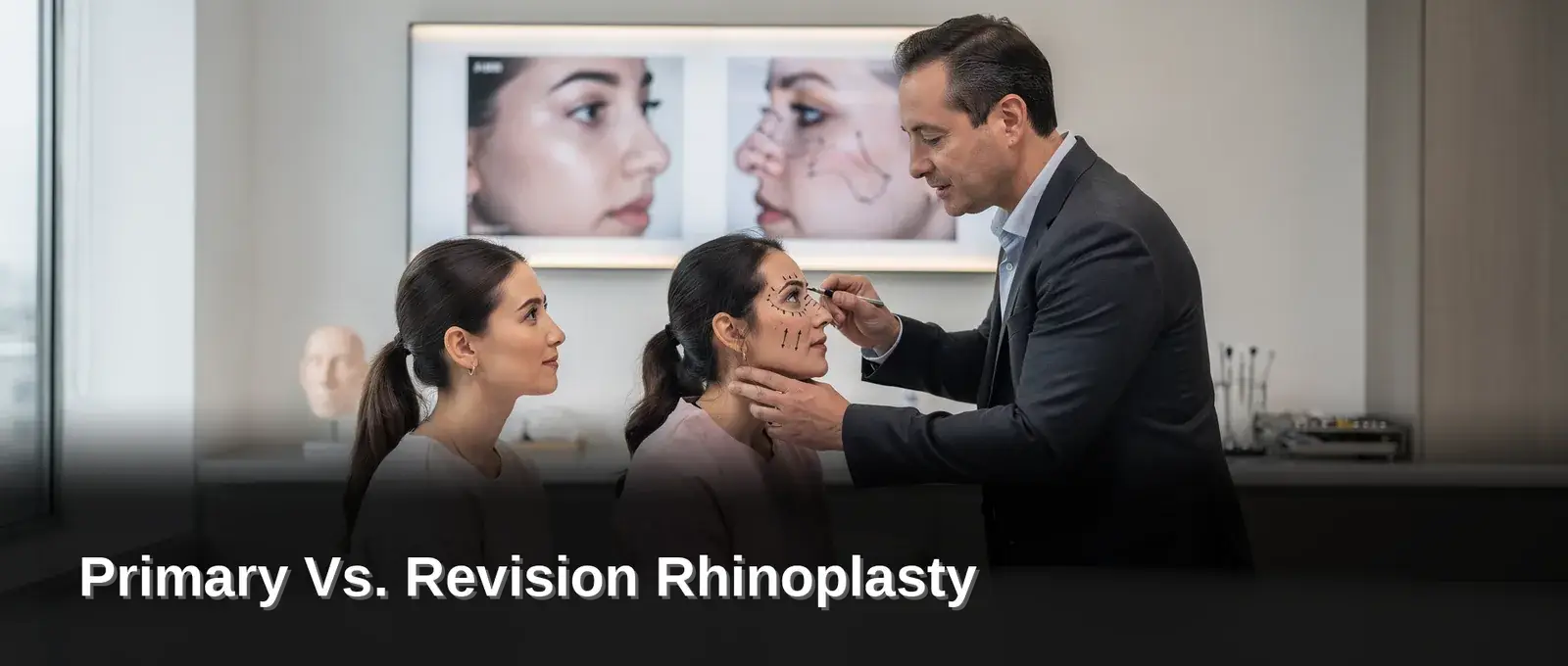
Secondary nasal surgery requires a reconstructive surgeon due to the compounded difficulties of scar tissue, altered anatomy, and compromised function. Dr. Ali Totonchi, a board-certified plastic surgeon recognized by Newsweek and Cleveland Magazine, specializes in secondary nasal surgery. His expertise addresses both cosmetic dissatisfaction and breathing difficulties, optimizing nasal airway function while restoring natural nasal appearance.
Key Takeaways
- Revision rhinoplasty demands a reconstructive surgeon because scar tissue, altered anatomy, and compromised function complicate every correction.
- The first operation leaves behind unpredictable scar planes and missing structural support that the surgeon must navigate.
- Cartilage grafting rhinoplasty becomes essential when the native framework is compromised, requiring harvest from ear, rib, or septum.
- A secondary nose job operates on scarred, altered tissue rather than untouched anatomy, changing every phase of care from planning to recovery.
Why Is Revision Rhinoplasty More Challenging?
A revision rhinoplasty presents far greater surgical complexity than a primary procedure. Scar tissue, altered anatomy, and depleted cartilage transform each secondary nose job into a demanding reconstructive puzzle. Most plastic surgeons agree that rhinoplasty ranks among the most challenging cosmetic procedures, according to the American Society of Plastic Surgeons. The nose’s central, intricate structure makes every millimeter of change visible.
What makes the nose so difficult to operate on a second time?
Prior surgery disrupts the underlying anatomy. A revision rhinoplasty specialist must work through unpredictable scar tissue and compromised structural integrity. These cases are among the most difficult aesthetic plastic surgery cases a surgeon faces. The original operation removes or reshapes cartilage that cannot be restored to its original form.
Expert rhinoplasty requires correcting nasal deformities while preserving nasal function simultaneously, since appearance and breathing must be addressed together.
How does cartilage loss affect revision outcomes?
Cartilage grafting rhinoplasty becomes essential when the native framework is compromised. A structural nasal reconstruction approach rebuilds what the first surgery weakened or removed. Revision rhinoplasty applies to any patient who has previously undergone rhinoplasty one or more times and desires improvement in both appearance and often function. The surgeon must harvest cartilage from the ear, rib, or septum to restore shape and support. Without this step, the nose risks collapse and airway obstruction.
What Makes a Secondary Nose Job Different?
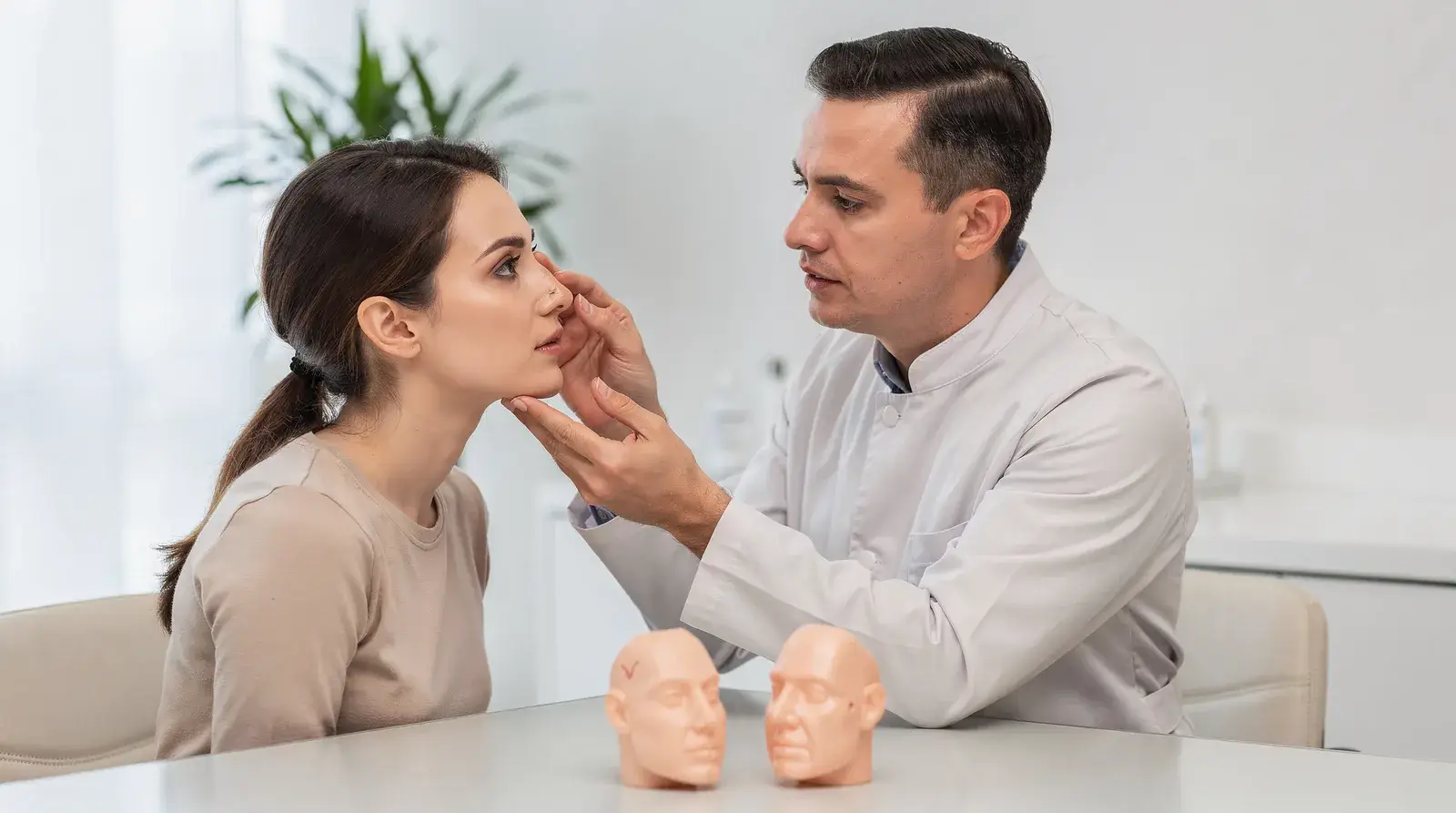
Unlike a primary procedure, a secondary nose job involves operating on scarred, altered tissue rather than untouched anatomy. This distinction changes every phase of care, from planning to recovery. Patients who skip this reality risk another disappointing outcome.
Why Does a Secondary Nose Job Require a Different Surgeon?
A revision rhinoplasty specialist works with the patient throughout the entire process, from the planning stage before surgery through the technical demands of the procedure and the full healing process. This continuity matters because secondary cases involve unpredictable scar patterns and depleted cartilage. Dr. Ali Totonchi is a board-certified plastic surgeon by American board Plastic Surgery who has anchored his career in clinical excellence and specialized surgical leadership in Northeast Ohio. His deep clinical mastery of complex facial anatomy contributes to high standards in primary and secondary nose surgery.
What Should Patients Prioritize Before Choosing a Surgeon?
Patients considering a secondary nose job should take their time and choose their surgeon with care for the best possible outcome. Rushing this decision compounds the original disappointment. A measured approach allows for thorough evaluation of surgical experience, revision-specific training, and documented results. Dr. Ali Totonchi’s credentials reflect the depth of expertise secondary cases demand.
How Does Cartilage Grafting Rhinoplasty Restore Structure?
Cartilage grafting rhinoplasty rebuilds the nose’s internal framework when a previous surgery removed too much tissue. A secondary nose job often lacks sufficient septal cartilage for support. Surgeons harvest cartilage from the ear or rib to create a stable foundation.
Structural nasal reconstruction addresses both form and function. The graft restores dorsal height, tip projection, and airway patency simultaneously. Without adequate structural support, the nose collapses over time.
What Cartilage Sources Are Used in Revision Rhinoplasty?
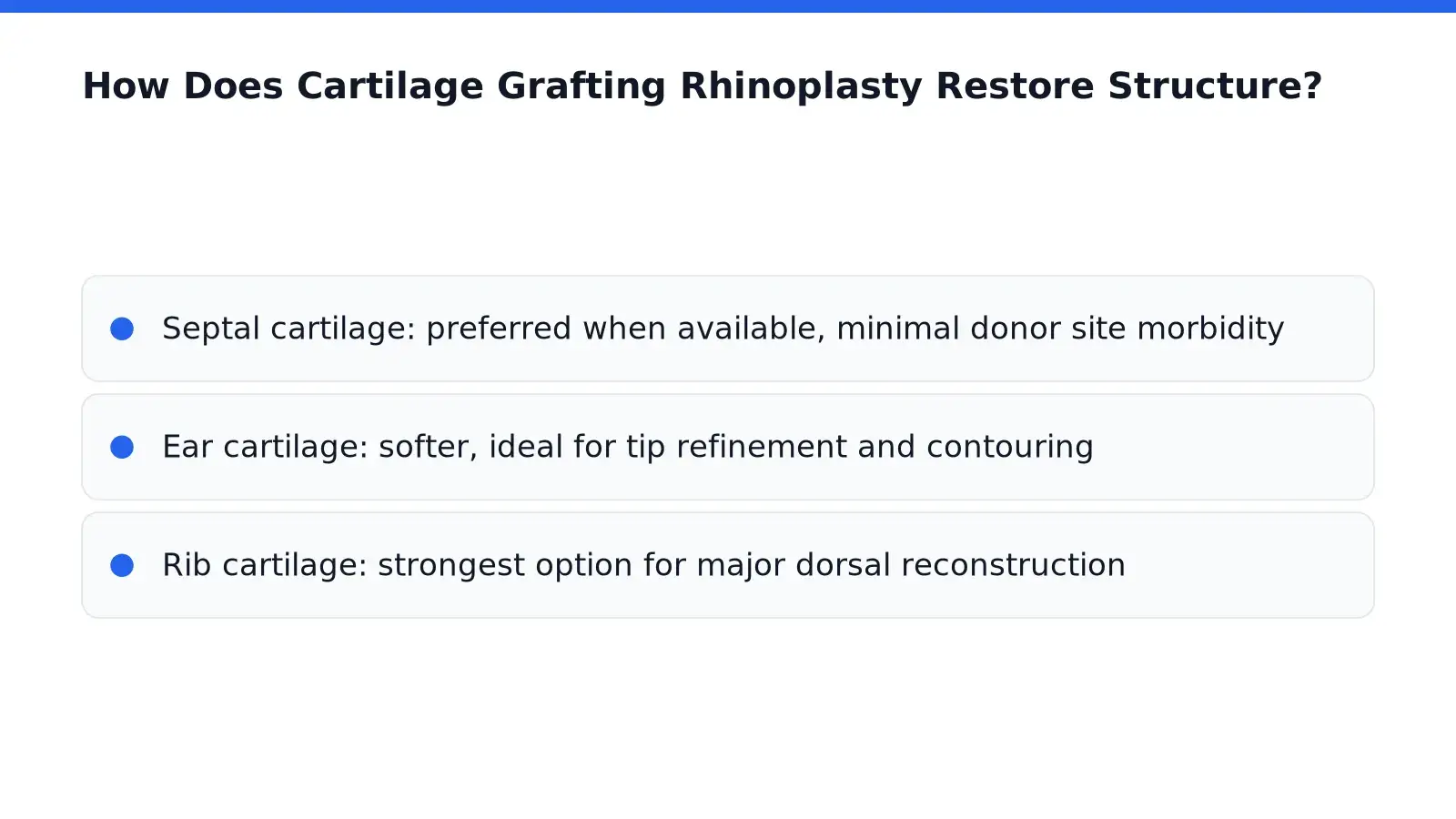
- Septal cartilage: preferred when available, minimal donor site morbidity
- Ear cartilage: softer, ideal for tip refinement and contouring
- Rib cartilage: strongest option for major dorsal reconstruction
Dr. Totonchi integrates advanced aesthetic procedures with complex reconstructive surgery. His dual-focused practice handles revision rhinoplasty cases requiring septal, ear, or rib cartilage grafting. Extensive experience in rhinoplasty supports precise graft carving and placement.
Why Does Structural Support Matter After a Primary Nose Job?
A nose without adequate framework weakens with scar contracture, narrowing the airway and dropping the tip. Patients in the Greater Cleveland area seek correction at Totonchi Plastic Surgery in Lyndhurst, Ohio. The practice restores both nasal aesthetics and airway function through careful structural grafting.
FAQ
Why is revision rhinoplasty more challenging than primary rhinoplasty?
Scar tissue, altered anatomy, and depleted cartilage complicate every correction. Prior surgery disrupts underlying anatomy, leaving unpredictable scar planes and missing structural support that a specialist must navigate.
Why does a secondary nose job require a different surgeon?
A revision specialist operates on scarred, altered tissue rather than untouched anatomy. This changes every phase of care, from planning through recovery, and requires working with the patient throughout the entire process.
How does cartilage loss affect revision rhinoplasty outcomes?
Cartilage grafting becomes essential when the native framework is compromised. The surgeon harvests cartilage from the ear, rib, or septum to rebuild shape and support, preventing nasal collapse and airway obstruction.
Conclusion
Choosing a surgeon for a secondary nose job demands a higher standard of expertise than a primary procedure. The altered anatomy, scar tissue, and need for cartilage grafting require a specialist who navigates these complexities with precision. Patients must prioritize a surgeon with proven experience in revision rhinoplasty to achieve both aesthetic and functional correction. This decision determines whether the outcome restores structure and breathing or compounds the initial disappointment.